The Story
Le Geste d'Edmond
The gesture that built a billion-dollar industry — invented by a child the world refused to remember.
The Problem
Twenty Years of Failure
For twenty years, French colonists grew vanilla orchids on Réunion Island. The vines flourished. The flowers bloomed. But no fruit came. Without the Melipona bee — vanilla's natural pollinator, found only in Mexico — the flowers died unpollinated. Europe's finest botanists could not solve it.
The Boy
Born into Darkness
Edmond was born into slavery around 1829 on a plantation in Sainte-Suzanne. His mother died in childbirth. But Féréol Bellier-Beaumont, the plantation owner, noticed something unusual — the boy had a gift for understanding plants.
The Gesture
What No Scientist Could Do
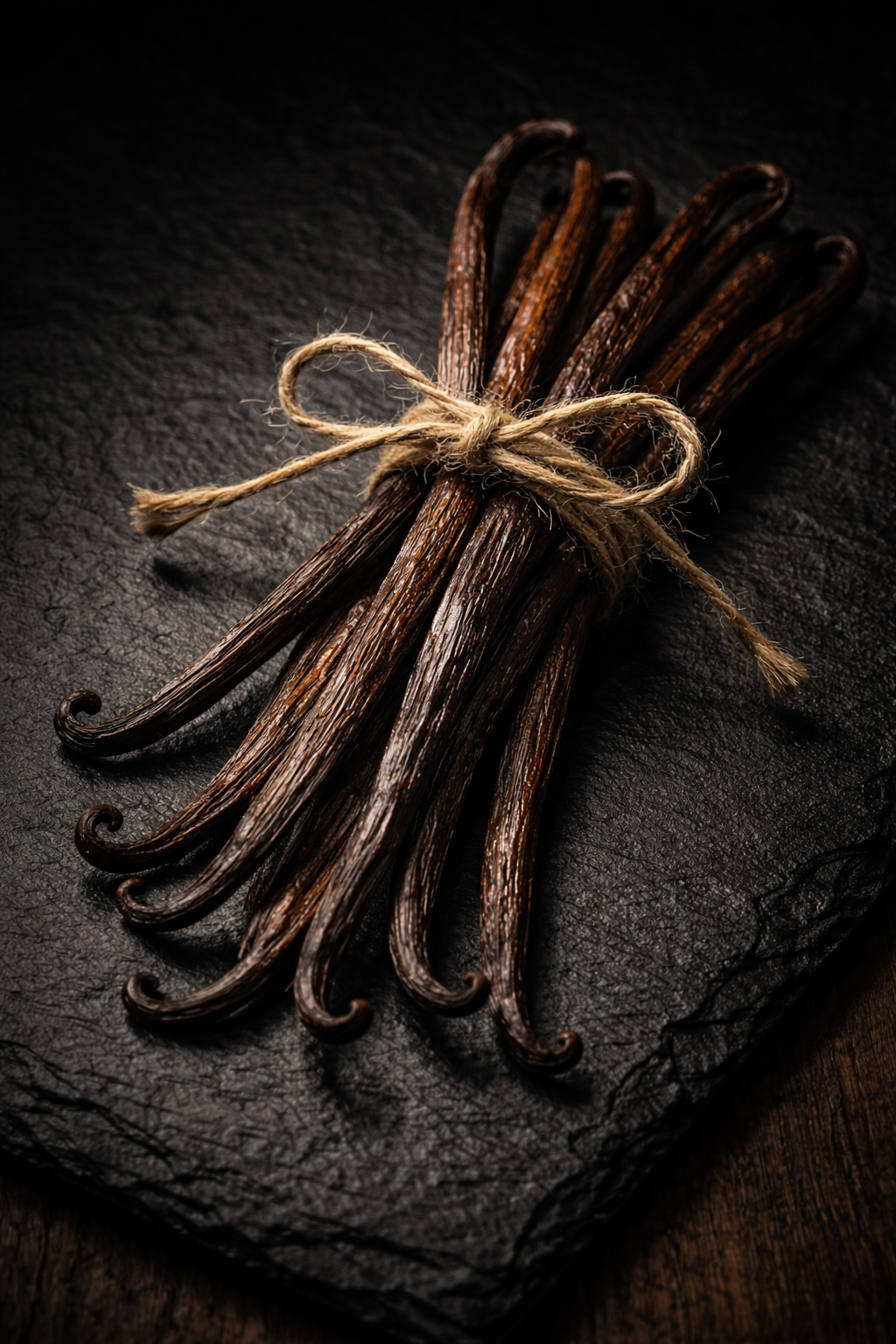
At twelve years old, Edmond did what no scientist could. Using a thin stick and his thumb, he lifted the tiny membrane separating the male and female parts of the vanilla flower and pressed them together. Pollination in seconds. The technique is still called le geste d'Edmond — Edmond's gesture. It is performed billions of times per year. Every vanilla bean in the world traces back to his fingertips.
The Injustice
Erased from History
A French botanist claimed credit. Edmond received nothing. After emancipation in 1848, the registrar gave him the surname Albius — among the A-names assigned to freed slaves, later linked to the white vanilla flower. He worked as a kitchen servant and died in 1880, his contribution still unrecognized. His obituary read: « Comme plus d'un inventeur, ses pareils, il a vécu misérable et il est mort oublié. » — “Like more than one inventor before him, he lived in misery and died forgotten.”
The Legacy
His Name on the Shelf
We named this company after him. Not out of pity — out of reverence. Edmond Albius made a multi-billion-dollar global industry possible. It is time his name stood on the shelf.
"It is entirely due to him that this country owes a new branch of industry — for it is he who first discovered how to manually fertilize the vanilla plant."— Féréol Bellier-Beaumont, defending Edmond against false claims